What Does FC 27 Player Lock Do and How Do You Use It Properly?
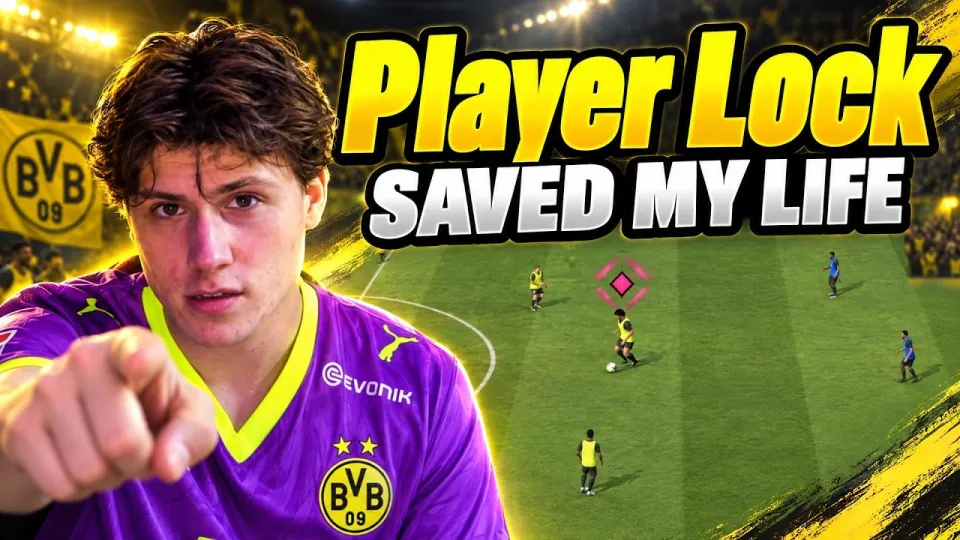
Video: FC 27 Player Lock Tutorial: How a BVB Esports Pro Uses It
· based on the channel LucasGeerken
Key takeaways
- Player lock in FC 27 lets you control a player without the ball while the AI keeps the ball carrier moving on its own.
- It is activated by holding the L3/LS button (left stick click) and released to snap control back to the ball carrier.
- Former BVB esports pro LucasGeerken recommends setting it up before anything else, alongside your controller settings.
- The mechanic is most effective off the ball to make manual runs, drag markers away and create space in the final third.
- Using player lock for too long or in the wrong moment leaves the ball carrier exposed to an easy AI-driven tackle.
Player lock in FC 27 is a control mechanic that lets you take manual control of a player without the ball while the AI keeps the ball carrier moving, so you can make runs, pull defenders out of position and create space off the ball. You activate it by holding in the left stick (L3/LS) and release it to snap back to the player on the ball. The technique is explained step by step in a tutorial by LucasGeerken, a former BVB esports pro.
What FC 27 player lock actually does
Player lock detaches your control from the ball carrier and hands it to a teammate. While the lock is active, the AI drives the player in possession forward, sideways or into the nearest safe space, and you steer a second player manually. As soon as you let go of the stick button, control returns to the man on the ball.
The point is not to show off. It is a way to influence two things at once: the AI keeps the ball moving, and you decide where the next passing option appears. In practice, player lock turns a static attack into a two-part movement, with a runner committing a defender while the ball carrier waits for the gap to open.
Three things define the mechanic in EA FC 27:
- It is a hold, not a toggle. You keep the button pressed for as long as you want manual control of the off-ball player.
- The AI handles the ball. The ball carrier will not wait for you; it keeps moving, so you have to read where it is going.
- The switch is instant. Releasing the button returns you to the ball carrier with no animation delay, which is what makes quick lock-and-release sequences viable.
How to set up player lock step by step
The setup is short, but it should be done before you touch tactics or skill moves, because everything else depends on the controller feeling right. LucasGeerken's advice is to sort out your controller configuration first and only then start practising the mechanic.
- Open the controller settings in the FC 27 menu and confirm your control scheme (Classic or Alternate) so you know which stick click maps to player lock.
- Check that the left stick click (L3/LS) is not bound to something else you use often, such as sprint or a custom remap.
- Go into the Skill Games or a Kick-Off match on a low difficulty to test the hold-and-release timing without pressure.
- Practise releasing the lock at the exact moment the runner reaches the defensive line, not after.
- Once the release feels natural, take it into Squad Battles or Rivals and use it only in the final third at first.
If you play with custom button remaps or a controller with back paddles, map the stick click to a paddle. Holding L3 while steering with the same stick is uncomfortable on a standard pad, and a paddle removes that friction entirely.
When to use player lock and when to leave it alone
Player lock is a final-third tool, not a whole-match habit. The moments where it pays off are specific: you have the ball in a wide or central area, a teammate is making a run that the AI would not trigger on its own, and there is enough space for the ball carrier to keep moving for a second or two.
Good situations to lock:
- Manual runs in behind. Send a striker or winger into the channel while the AI carries the ball, then release and play the through ball.
- Dragging a marker away. Move your locked player across the pitch to pull a centre-back out of the line and open a gap for the ball carrier.
- Overloads on the wing. Lock the full-back or winger to create a two-on-one against a defender while the AI holds the ball wide.
- Breaking a low block. Shift a midfielder into the pocket between the lines so the AI has a forward pass available.
Situations where player lock hurts you:
- In your own half. The AI ball carrier is predictable under pressure, and a locked defender is a defender you are not controlling.
- Against a high press. If the opponent closes down the ball carrier immediately, the AI will lose the ball while you are steering someone else.
- For long stretches. Holding the lock for several seconds invites a tackle on the AI-controlled player.
- In the box during a scramble. Loose balls need your direct input, not an AI decision.
Tips to play better with player lock
Timing beats duration. The best player lock users hold the button for under two seconds in most situations: long enough for the runner to commit a defender, short enough that the AI ball carrier never gets isolated.
Keep the ball carrier's momentum in mind. The AI will not stop and wait, so lock when the player on the ball is already moving into space rather than when they are standing still with their back to goal.
Pair the mechanic with a clear passing plan. Decide before you lock which pass you want: the through ball into the channel, the cutback to the edge of the box, or the switch to the far side. Locking without a plan just moves a player for no reason.
Watch the mini-map and the defensive line, not the ball. While you are steering the locked player, your eyes should be on the space you are attacking and on the opponent's back line, because the AI is responsible for the ball.
Use it sparingly in defence. Player lock can be used to manually cover a passing lane, but the risk of leaving the ball carrier unmarked is high. Most players are better off defending with the player closest to the ball and letting the AI hold shape.
Finally, combine player lock with the rest of your settings. A pro-level controller setup, sensible camera height and consistent pass assist values make the mechanic far easier to time than default settings.
Summary
Player lock in FC 27 is a hold-and-release mechanic that gives you manual control of an off-ball player while the AI keeps the ball carrier moving, and it is most valuable in the final third for manual runs, dragging markers and creating overloads. The setup is simple: confirm the L3/LS binding, test the timing in Skill Games, and only then use it in competitive modes. Keep the holds short, have a passing plan ready, and avoid locking in your own half or against a high press. The breakdown comes from LucasGeerken, a former BVB esports pro who walks through the mechanic in his FC 27 player lock tutorial.
Source: FC 27 Player Lock Tutorial: How a BVB Esports Pro Uses It · Markdown version
Questions & answers
How do you activate player lock in FC 27?
Hold in the left stick (L3/LS) while your team has the ball. Control switches to a player without the ball, and the AI keeps the ball carrier moving. Release the stick click to take control of the ball carrier again.
Is player lock worth using in FC 27?
Yes, but mainly in the final third. It is the fastest way to trigger manual runs and pull defenders out of position. In your own half or against a high press, the AI ball carrier is too easy to dispossess, so keep the holds short.
Does player lock work in defence in FC 27?
It does, but it is risky. You can use it to manually cover a passing lane, yet the AI then controls the player closest to the ball, which often leads to a missed tackle. Most players should defend with the nearest player and leave player lock for attack.
How long should you hold player lock?
In most situations under two seconds. Hold long enough for the runner to commit a defender, then release and play the pass. Long holds leave the AI ball carrier isolated and easy to tackle.