Rust solo survival turns 14 days of wipe into one 4-hour 50-minute movie worth studying
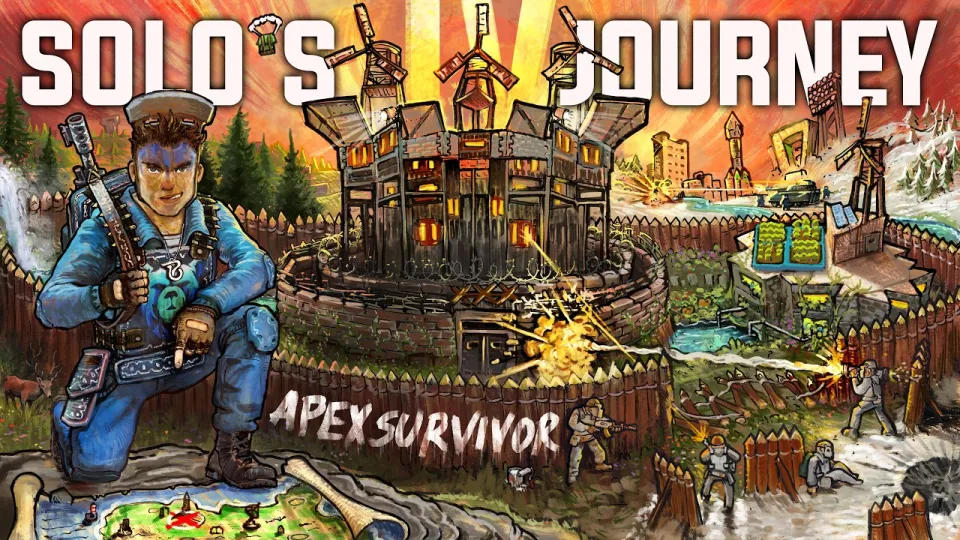
Video: Rust - A Solo's Journey IV: Apex Survivor (Movie)
Want articles like this for your own video to promote it on YouTube and Google? Order them through the Telegram bot @sat_sit_bot. It writes articles around your video, embeds the video and publishes them on popular niche websites (no ads). Try it free: 50 articles on us.
· based on the channel Blooprint
Key takeaways
- Blooprint's Rust movie covers 14 days of a solo wipe, filmed and edited over 300+ hours of work.
- Runtime is roughly 4 hours 50 minutes, split into 12 numbered chapters plus an intro and ending.
- A dedicated tracker site, solosjourneytracker.com, lets viewers type a timestamp and see progress at that point.
- The run includes solo base building, farming, cloning, raids, Oil Rig and cargo ship content, and PvP.
- The video marks 2.5 million subscribers on the channel, with limited merch tied to that milestone.
Rust solo survival is the practice of running a full wipe alone on a populated server, and Blooprint's "A Solo's Journey IV: Apex Survivor" shows what that looks like at the highest level: 14 days of solo play compressed into a single film of about 4 hours 50 minutes. The movie is built from more than 300 hours of filming and editing, and every stage of the wipe is mapped on the Solo's Journey tracker, where you can type a timestamp and instantly see the base, gear and progress at that moment. It is the fourth entry in the Solo's Journey series and doubles as a 2.5 million subscriber milestone project.
What a Rust solo wipe actually demands
A solo Rust wipe is a test of time management more than aim, because one player has to cover every role a clan splits between members. In a 14-day run the schedule matters as much as the fights: early hours go to a starter base and basic tools, the middle days to farming, components and blueprints, and the late wipe to raids, monuments and defending what you have built. Doing all of it alone means no one farms for you while you fight, no one defends while you sleep, and every loss of a kit is a full reset of your own time.
The film makes that trade-off visible. Chapters follow each other in a clear arc, from the first vulnerable hours through a fully established base to the point where a single player can threaten groups. That structure is the reason the runtime works: each chapter has its own goal, its own risk and its own payoff, so the movie reads as a series of missions rather than one long session.
The chapter structure of the movie
"Apex Survivor" is divided into twelve numbered chapters plus an introduction and a closing segment, and the pacing follows the natural rhythm of a long wipe. The opening sets the rules of the run and the state of the server; the early chapters cover the scramble for a foothold and the first serious confrontations; the middle chapters expand into monument runs, farming infrastructure and base upgrades; the last third leans into raids, revenge and the defense of everything built over two weeks.
The chapter markers are also the reason the tracker site exists. Instead of guessing what gear the player had at a given moment, a viewer can enter a timestamp and see the corresponding progress, which makes a five-hour film far easier to watch in parts. For anyone studying solo Rust rather than just watching it, the chapter list works as a syllabus: each block is a self-contained problem with a solution shown on screen.
Base building lessons from a solo perspective
Solo base design in Rust is about cost efficiency, and the movie treats the base as a tool rather than a trophy. A solo player cannot afford the honeycomb and layered walls a clan builds, so the priorities shift to compact footprints, cheap upkeep, smart loot placement and at least one trick that punishes a raider who expects a standard layout. Farming bases, cloning setups and secondary outposts matter as much as the main compound, because they let one player sustain a wipe that would otherwise stall.
Viewers who watched closely singled out the unconventional core design as the most interesting part of the build, noting that it is not a meta layout but paid off anyway. That is a useful lesson in itself: on a solo run, being unpredictable is a form of defense. A base that costs little to maintain and looks unrewarding to raid protects a solo player better than an expensive shell that invites a clan to test it.
PvP, raids and the social side of a solo run
Solo PvP in Rust is not about winning every fight, it is about choosing which fights to take. The movie shows the full range: quick defensive holds, ambushes on larger groups, monument contests and the constant threat of being outnumbered at the worst moment. Raids get the same treatment, with preparation, scouting and timing treated as seriously as the explosives themselves.
What makes the run memorable is the social layer around it. Neighbors, temporary alliances, betrayals and long-running grudges shape the wipe as much as gear does, and one of the most discussed moments in the comments is a deserved raid on hostile neighbors rather than any single fight. A solo player survives a two-week wipe partly by reading other players: who is worth talking to, who will stab you in the back, and which group is worth avoiding entirely.
Questions viewers ask about the run
Three themes come up again and again in reactions to the film. The first is time: how one person can play 14 days of Rust and still produce a coherent story. The answer is planning before recording and heavy editing after, which is why the project took over 300 hours of production work for a runtime under five hours.
The second theme is authenticity. Some viewers assume a run this clean must involve help, but the format is explicitly solo, and the tracker site exists precisely to let people verify progress at any point in the timeline. The third theme is the base itself: whether an off-meta design is a mistake. The run suggests the opposite, since a cheap and confusing base survives longer than an expensive one that screams loot.
Finally, viewers often ask where to start. Watching in chapters, with the tracker open, turns the movie into a practical guide for anyone attempting their own solo wipe on a busy server.
Useful links from the video
- Solo's Journey tracker — timestamp-by-timestamp progress for the whole run
- Blooprint Youtooz vinyl figure — limited 2.5M subscriber merch, available until October 27th 2026
- Blooprint mousepads and playmats — available until January 3rd 2027
- Hires Studio — animated intro
- Veys — thumbnail art
Why this movie is worth the runtime
A near five-hour video about a solo Rust wipe sounds unwatchable until you see how it is built, and that is the real achievement here. The chapter structure, the tracker site and the focus on decisions rather than kill counts turn a long survival run into something closer to a documentary about one player against a server. It also explains the channel's reputation for versatility: storytelling, PvP and production value in the same project.
Blooprint treats the wipe as a narrative with a beginning, a middle and a proper ending, and the closing chapters pay off threads planted hours earlier. If you want to understand what solo Rust costs in time and attention, this is the clearest demonstration available. Keep the Solo's Journey tracker open while you watch and check your own progress against the run.
Source: Rust - A Solo's Journey IV: Apex Survivor (Movie) · Markdown version
Questions & answers
How long is the Rust movie and how is it structured?
The film runs about 4 hours 50 minutes and is split into an introduction, twelve numbered chapters and a closing segment. Each chapter covers a distinct phase of the 14-day solo wipe, from the first starter base to late-wipe raids and defense.
What is the Solo's Journey tracker for?
It is a website built for this video where you enter a timestamp and see the player's base, gear and progress at that exact point. It makes a five-hour film easy to watch in parts and lets viewers verify how the run developed.
Is a 14-day solo Rust wipe realistic for a normal player?
It is possible but demanding, since one person must handle farming, building, PvP and defense without help. The practical lessons are a cheap compact base, low upkeep, careful fight selection and a clear daily plan rather than constant aggression.
Why does the base design matter so much in a solo run?
A solo player cannot match a clan's layered walls, so efficiency and unpredictability replace raw size. A compact, inexpensive base with an unusual core is harder to evaluate for raiders and cheaper to maintain across a long wipe.